


Walk into any pool store and you'll see dozens of spa products. The good news is that you only need a handful of hot tub chemicals to keep your water clean, clear and comfortable. This guide covers what each one does, the level to aim for, a simple routine for using them, and our top 10 picks.
Hot tub chemicals checklist
| Chemical | What it does | Target level | How often |
|---|---|---|---|
| Sanitizer (bromine or chlorine) | Kills bacteria | Bromine 3–5 ppm or chlorine 3–5 ppm | Check 2–3 times a week |
| Shock (oxidizer) | Breaks down oils, sweat and spent sanitizer | — | Weekly and after heavy use |
| Alkalinity increaser | Keeps pH stable | 80–120 ppm | As needed |
| pH increaser and decreaser | Keeps water comfortable and sanitizer effective | 7.2–7.8 | As needed |
| Calcium hardness increaser | Protects heater and parts from corrosion; reduces foam | 150–250 ppm | After each refill |
| Test strips or test kit | Shows what to add | — | 2–3 times a week |
The essential hot tub chemicals
1. Sanitizer
A sanitizer kills the bacteria that grow quickly in warm water. Most hot tubs use one of two:
- Bromine: the most common choice for hot tubs. It stays more stable at high temperatures and has less odor. See the best bromine for your hot tub.
- Chlorine: usually dichlor granules. It works fast and costs less, but needs topping up more often.
Not sure which to pick? Read bromine vs. chlorine for spas and hot tubs. Mineral systems can reduce how much sanitizer you need, but they don't replace it; see spa mineral sanitizers.
2. Shock (oxidizer)
Shock burns off body oils, lotions, sweat and spent sanitizer that build up in the water. There are two types:
- Chlorine shock (dichlor): oxidizes and raises your chlorine level.
- Non-chlorine shock (MPS, potassium monopersulfate): oxidizes only, and you can usually use the tub again soon after. Popular with bromine tubs.
Shock weekly, and after a party or heavy use. Compare options in our top 5 hot tub shocks.
3. Total alkalinity increaser
Total alkalinity buffers your pH. If it's low, pH swings up and down; if it's high, pH drifts up and the water can turn cloudy. Keep it at 80–120 ppm, and always adjust alkalinity before pH.
4. pH increaser and pH decreaser
Low pH (below 7.2) makes water acidic, which irritates eyes and skin and corrodes heaters and metal parts. High pH (above 7.8) makes sanitizer much less effective and causes scale and cloudy water. Keep pH at 7.2–7.8. Our step-by-step guide on how to balance hot tub pH and alkalinity shows exactly what to add and in what order, and you can compare the best hot tub pH balancers.
5. Calcium hardness increaser
Water that's too soft corrodes your heater and equipment and often foams. Most acrylic hot tubs need 150–250 ppm. Follow our guide on how to raise calcium hardness in a hot tub.
6. Test strips or a test kit
Testing tells you what to add and how much. Test 2–3 times a week, and before and after adding any chemical. Shop water test kits and strips, and see how to test hot tub water.
Helpful extras
- Clarifier: clears hazy water by helping the filter catch tiny particles. See top-rated clarifiers for hot tubs, including what to do about cloudy water in winter.
- Defoamer: knocks down foam quickly. Foam is a sign of built-up oils or soft water, so also shock and check calcium. See how to get rid of hot tub foaming.
- Enzymes: break down oils and scum lines between shocks. See common questions about hot tub enzymes.
- Stain and scale control: useful with hard or metal-rich fill water. See how to eliminate hot tub scale.
- Line flush and filter cleaner: clean biofilm from plumbing before each drain, and oils from the filter cartridge every few weeks. See how to clean a hot tub filter.
How to use hot tub chemicals: a simple routine
After a fresh fill: add a metal sequestrant if your water is hard or from a well, then balance alkalinity, then pH, then calcium hardness. Shock, and bring sanitizer into range before using the tub.
2–3 times a week: test sanitizer, pH and alkalinity, and top up sanitizer.
Weekly: shock the water, and rinse the filter.
Monthly: deep-clean the filter with a filter cleaner, and check calcium hardness.
Every 3–4 months: flush the lines, then drain and refill the hot tub.
Safety tips: add one chemical at a time with the jets running and the cover open, and wait about 20–30 minutes before adding the next. Never mix chemicals together, always add chemicals to water (not water to chemicals), and follow each product's label. Store chemicals separately, sealed and dry; see how to store hot tub chemicals.
Top 10 hot tub chemicals
These are our picks to cover every step of the routine above.
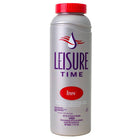
- Leisure Time RENU2 Non-Chlorine Shock (shock): a quick-dissolving potassium monopersulfate oxidizer, buffered so it won't shift pH. Works with chlorine, bromine, ozone and mineral systems.
- Leisure Time Brom Tabs (sanitizer): slow-dissolving bromine tablets for a floater or feeder, for steady sanitizer between top-ups.
- SpaGuard Chlorinating Concentrate (sanitizer): dichlor granules for chlorine hot tubs, which also work as a chlorine shock.
- Natural Chemistry Spa pH Increaser and Spa pH Decreaser (pH): raise or lower pH into the 7.2–7.8 range.
- Spa Essentials Total Alkalinity Increaser (alkalinity): granules that raise total alkalinity to keep pH stable.
- Natural Chemistry Spa Calcium Hardness Increaser (calcium): raises calcium hardness after a refill with soft water.
- AquaChek 6-in-1 Test Strips for Spas and Hot Tubs (testing): checks the key readings in about 15 seconds.
- Leisure Time Bright and Clear (clarifier): a polymer clarifier for hot water that helps the filter remove fine particles and helps prevent scale.
- SpaGuard Anti Foam (defoamer): knocks down foam fast while you fix the cause.
- AquaDoc Spa Jet Line Cleaner (line flush): add before draining to clear biofilm and gunk from the jets and plumbing.
Beyond chemicals
Clean water also depends on a working filter, a good cover and healthy equipment. Find replacement cartridges, covers, jets and other parts in spa parts and accessories, and replacement filters in pool and spa filters.
Shop our full range of spa and hot tub chemicals. If you have any questions about which hot tub chemicals you need, please let us know - we are here to help!


