Calcium hardness is the amount of dissolved calcium in your hot tub water. It's easy to overlook, but when it's too low the water becomes aggressive: it can pull calcium from wherever it can find it, corroding heater elements, pump seals and metal jet parts, and it often makes the water foam. Here's how to check it and raise it safely.
What calcium hardness should a hot tub have?
Most hot tub makers recommend 150–250 ppm for acrylic spas. Some allow up to 400 ppm, so check your owner's manual. Below about 100 ppm, raise it.
Common reasons hardness is low:
- You filled the tub with soft or softened water (never fill a hot tub from a water softener).
- You just drained and refilled.
- You live in an area with naturally soft tap water.
What you'll need
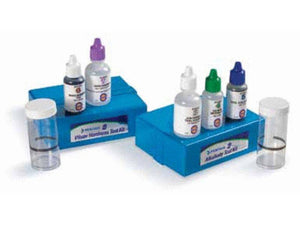
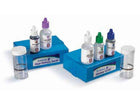
- A hardness test, such as the Pentair R151276 total water hardness test kit, or test strips.
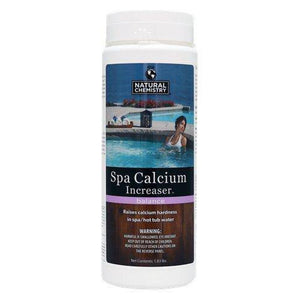
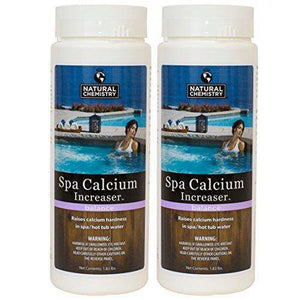
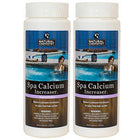
- A calcium increaser such as Natural Chemistry Spa Calcium Hardness Increaser (also available as a 2-pack).
- A clean plastic bucket, a measuring scoop, gloves and eye protection.
- Your hot tub's volume in gallons. Most hold 300–500 gallons; check the manual.
How much calcium increaser to add
As a rough guide, about 1 oz of calcium chloride per 500 gallons raises hardness by about 10 ppm. Products differ in strength, so always use the dose on your product's label.
| Hot tub size | Raise by 25 ppm | Raise by 50 ppm | Raise by 100 ppm |
|---|---|---|---|
| 300 gallons | about 1.5 oz | about 3 oz | about 6 oz |
| 400 gallons | about 2 oz | about 4 oz | about 8 oz |
| 500 gallons | about 2.5 oz | about 5 oz | about 10 oz |
Example: a 400-gallon tub at 80 ppm needs about 100 ppm to reach 180 ppm, so about 8 oz. Add it in two or three smaller doses rather than all at once.
How to raise calcium hardness in a hot tub, step by step
- Test the water. Test calcium hardness, total alkalinity and pH. Adjust alkalinity first (80–120 ppm), then pH (7.2–7.8), and calcium last.
- Calculate the dose. Use your tub's volume, the table above and your product label. Plan to add about half to two-thirds of the total first.
- Pre-dissolve it. Fill a bucket with water from the hot tub, then slowly add the calcium increaser to the water (never water to the chemical) and stir. Calcium chloride gives off heat as it dissolves, so use a plastic bucket and wear gloves and eye protection.
- Add it with the jets on. With the cover open and the circulation pump or jets running, pour the solution slowly into the water away from the skimmer.
- Circulate. Run the jets for 15–30 minutes, then let normal filtration run. Leave the cover open briefly to let heat and fumes escape.
- Retest. Wait a few hours, or until the next day, then retest. Add the rest of the dose if needed.
- Rebalance. Adding calcium can nudge pH and alkalinity, so check them again and adjust.
Tips and mistakes to avoid
- Don't overshoot. Calcium is easy to add but can only be lowered by draining and refilling part of the water. Too much causes cloudy water and scale; see how to eliminate hot tub scale.
- Don't add it dry to the filter area. Undissolved granules can cloud the water or settle on the shell.
- Retest after every refill. Each new fill resets your calcium level.
- Low calcium and foam often go together. If raising hardness doesn't stop the foam, see how to get rid of hot tub foaming.
Want to compare products? See our top 7 calcium hardness increasers for hot tubs, learn how to test pool and hot tub water, and shop all spa and hot tub chemicals.